+91 9323688120
 contact@chakrayog.com
Shopping Cart
What Are Chakras? Meaning, Purpose & Role in Inner Balance
Author
undefined
Publication Date
Jan 14, 2026
Category
Chakra Therapy
Share This Blog


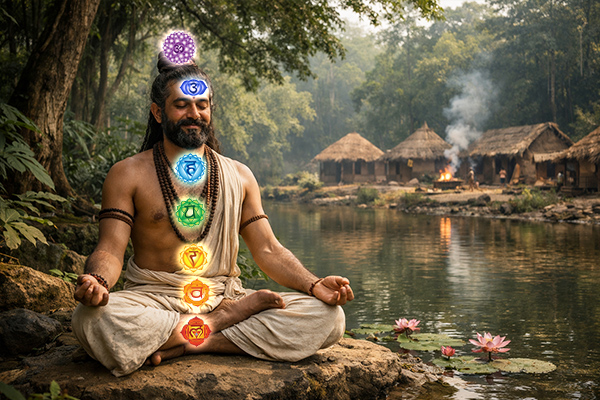
The word chakra comes from Sanskrit and means wheel or vortex . Chakras are subtle energy centres within the human system through which prana (life force energy) flows. Chakras exist within the etheric or subtle body, where they influence physical health, emotional patterns, mental processes, behaviour, and spiritual awareness.
Ancient yogic and tantric traditions understood the human being as more than a physical body. We are also an energetic and conscious system, constantly interacting with life through breath, awareness, emotion, and perception. Chakras describe how this interaction is organised within us.
Rather than being static points, chakras are dynamic centres of motion-places where energy, awareness, and experience gather, circulate, and express themselves. When these centres function harmoniously, life feels aligned and purposeful. When they are disturbed or imbalanced, we often experience stress, emotional struggle, physical discomfort, or a sense of being disconnected from ourselves.
Chakras as the Inner Architecture of Body, Mind, and Consciousness
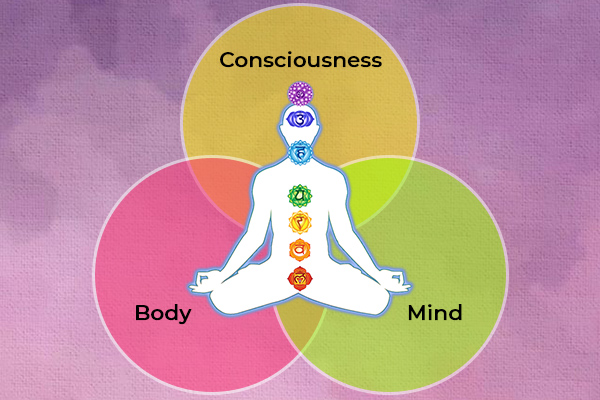
Energy in the human system flows through subtle pathways known as nadis . Where major pathways intersect along the spine, chakras form as centres that regulate how energy is received, processed, and expressed. Each chakra operates like a hub, influencing how we experience safety, emotion, power, love, expression, insight, and meaning.
Every chakra governs specific aspects of life:
- Physical organs and hormonal activity
- Emotional tendencies and coping patterns
- Mental beliefs and identity structures
- Stages of inner and spiritual growth
This is why emotional stress and physical symptoms often appear together. Each chakra corresponds functionally with nerve plexuses and endocrine glands, creating a natural bridge between consciousness, the nervous system, hormones, and the body. Chakras do not replace medical understanding; they offer a holistic framework for understanding how inner states and physical wellbeing are interconnected.
Chakras also function as an integrated system. An imbalance in one centre often affects others. Fear and insecurity can limit self-expression, emotional suppression can weaken vitality, and unresolved stress can ripple through the entire system. Understanding chakras allows us to see life challenges not as isolated problems, but as messages pointing toward inner realignment.
The Seven Main Chakras
There are seven primary chakras , aligned along the spine from the base to the crown. Together, they map the journey of human consciousness—from basic survival to spiritual realisation.
Root Chakra (Muladhara)
_206499.jpg)
Located at the base of the spine, this chakra governs safety, stability, grounding, and trust in life. It relates to survival needs, family, home, finances, and feeling supported by the physical world.
👉
Explore the Root Chakra
Sacral Chakra (Svadhisthana)
_206498.jpg)
Located below the navel, this chakra governs emotions, pleasure, creativity, sexuality, and relationships. It reflects our ability to feel, enjoy life, and move with change.
👉
Explore the Sacral Chakra
Solar Plexus Chakra (Manipura)
_206497.jpg)
Located at the upper abdomen, this chakra governs confidence, self-worth, willpower, and personal identity. It shapes how we take action, set boundaries, and claim our space in the world.
👉
Explore the Solar Plexus Chakra
Heart Chakra (Anahata)
_206502.jpg)
Located at the centre of the chest, this chakra governs love, compassion, forgiveness, and emotional balance. It bridges the lower physical chakras and the higher spiritual chakras.
👉
Explore the Heart Chakra
Throat Chakra (Vishuddha)
_206495.jpg)
Located at the throat, this chakra governs communication, truth, authenticity, and expression. It reflects our ability to speak and live in alignment with our inner truth.
👉
Explore the Throat Chakra
Third Eye Chakra (Ajna)
_206496.jpg)
Located between the eyebrows, this chakra governs intuition, perception, insight, and inner guidance. It allows us to see beyond surface reality and access deeper understanding.
👉
Explore the Third Eye Chakra
Crown Chakra (Sahasrara)
_206503.jpg)
Located at the top of the head, this chakra governs spiritual connection, expanded awareness, and unity with the larger intelligence of life.
👉
Explore the Crown Chakra
How Chakras Influence Everyday Life
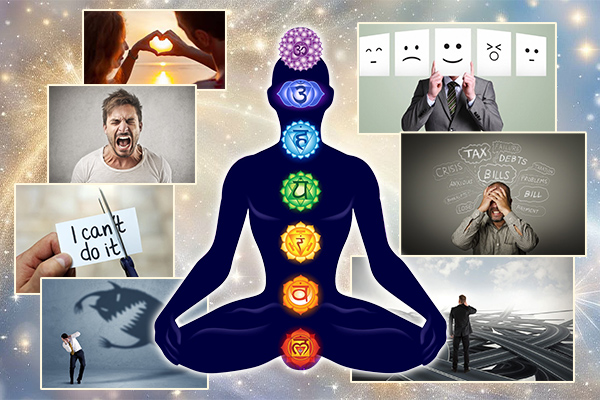
Chakras show up in everyday life through our energy levels, emotions, choices, relationships, and the way we respond to stress. Persistent fear, insecurity, or financial anxiety often reflect imbalance in the root chakra. Emotional volatility or relationship struggles relate to the sacral chakra. Low confidence, anger, or control issues point to the solar plexus. Difficulty trusting, loving, or forgiving reflects heart chakra imbalance. Fear of speaking up or being misunderstood affects the throat chakra. Mental confusion or lack of direction relates to the third eye, while a sense of emptiness or loss of meaning reflects imbalance at the crown.
By understanding chakras, challenges begin to make sense. They become signals for awareness and growth, rather than problems to suppress or fix.
Chakra Healing: Returning to Natural Balance
Chakra healing is not about forcing energy open or chasing extraordinary experiences. It is a process of awareness, release, and alignment. When attention, breath, and lifestyle begin to support balance, energy naturally reorganises itself.
Chakras can be supported through:
- Meditation and mindful awareness
- Breath-work and pranayama
- Yoga and conscious movement
- Mantra and sound practices
- Emotional release and inner reflection
- Simple, grounded lifestyle choices
Healing unfolds gradually. Each chakra opens in its own rhythm, revealing greater stability, clarity, and inner ease over time.
Why Understanding Chakras Matters

Understanding chakras gives you a map of inner growth. Instead of feeling overwhelmed by emotions, health concerns, or life patterns, you begin to recognise where energy is asking for attention.
Working with chakras supports:
- Emotional resilience
- Physical vitality
- Mental clarity
- Self-awareness
- Spiritual connection
Ultimately, chakras guide you back to your natural state of balance and wholeness. They do not make you someone new—they help you remember who you already are.
Origins & History of the Chakras
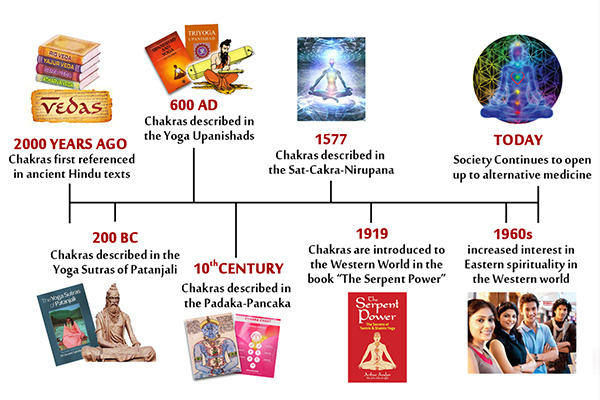
The concept of chakras evolved gradually across ancient Indian spiritual traditions rather than emerging as a single fixed system. The term chakra first appears in the Vedas as a symbol of motion, cycles, and centres of power. The Upanishads later introduced the idea of a subtle body animated by prana flowing through channels called nadis, especially the central channel, Sushumna . Clear descriptions of chakras as inner centres aligned along the spine appear in Tantric texts between the 6th and 10th centuries CE, where they are described as lotus-like centres associated with consciousness, mantra, and transformation. The seven-chakra model became widely known through later yogic works such as the Shat-Chakra-Nirupana , and was brought to modern audiences by scholars like Arthur Avalon (Sir John Woodroffe). Devotional texts such as Adi Shankaracharya’s Saundarya Lahari further portrayed chakras as sacred spaces where Devi manifests within the human system, framing the chakra journey as an inner path of spiritual awakening.
Chakras, Organs, and the Endocrine System

Chakras are subtle energy centres that also correlate with key nerve plexuses and endocrine glands, which regulate hormones for metabolism, immunity, sleep, mood, stress response, and reproduction. This is why emotional states often show up as physical symptoms, chronic stress can disturb cortisol and adrenaline patterns, affect thyroid function and digestion, and lead to fatigue, inflammation, gut issues, weight changes, or sleep disruption.
Over time, chakra understanding has also been explored through the lens of anatomy, physiology, and neuroendocrine regulation, offering a complementary perspective on how inner states influence physical wellbeing.
|
Chakra |
Key organs & body areas |
Major endocrine gland |
|
Root (Muladhara) |
Legs/feet, lower spine, large intestine/colon, bones, kidneys & bladder (grounding/survival functions) |
Adrenal glands |
|
Sacral (Swadhisthana) |
Reproductive organs (uterus/ovaries/testes), pelvis/hips, kidneys & bladder |
Gonads (ovaries/testes) |
|
Solar Plexus (Manipura) |
Stomach, liver, gallbladder, pancreas, small intestine, digestion/metabolism |
Pancreas |
|
Heart (Anahata) |
Heart, lungs, chest, circulation, immune balance |
Thymus |
|
Throat (Vishuddha) |
Throat, neck, mouth, jaw, upper lungs, voice & hearing balance |
Thyroid (often also Parathyroids ) |
|
Third Eye (Ajna) |
Brain, eyes, sinuses, nervous system coordination |
Pituitary gland |
|
Crown (Sahasrara) |
Brain/cerebral cortex, overall nervous system integration, higher awareness |
Pineal gland |
Chakras and Modern Science

Chakras are subtle centres where prana, awareness, and emotion meet-and modern healing approaches increasingly reflect this understanding. Practices like Reiki, energy healing, meditation, breathwork, sound healing, and colour therapy work with the same principle: when the inner system is calmed and aligned, the body naturally moves toward balance. Research on Reiki and energy healing also suggests observable benefits for stress, anxiety, and emotional wellbeing in supportive care contexts. From the yogic lens, chakras are zones where patterns of fear, grief, confidence, love, truth, and intuition are stored and expressed through the body. Sound and mantra help shift these patterns through vibration, while colours support healing by restoring subtle harmony. In traditional chakra systems, gemstones are found to channel copious colour-waves of a specific frequency into the corresponding chakra, helping restore its natural balance, and rudraksha beads are found to bring chakras back toward their natural state through resonance and vibration, steadying the mind and supporting inner calm—making chakra healing not just a concept, but a lived practice of returning to wholeness.
Related Blogs