 +91 9323688120
 contact@chakrayog.com
Shopping Cart
Mudras for Swadhisthana Chakra
Author
undefined
Publication Date
Jan 5, 2026
Category
Chakra Therapy
Share This Blog


Mudra is a Sanskrit term meaning hand gesture and refers to specific positions of the hands used to direct and balance the flow of prana within the body and mind. Used since ancient times in Hindu and Buddhist rituals classical dance and yogic practice, mudras form an essential part of yoga alongside asana and pranayama, with Namaste being the most widely recognized example. The word mudra comes from Sanskrit roots meaning dissolving duality and uniting the individual with the divine, reflecting its deeper spiritual function.
Yoga mudras work by redirecting energy through acupuncture meridians located in the hands, which act as a control panel for the energy body. Each finger represents one of the five elements fire water air space and earth and their balanced interaction supports physical mental and energetic health. By bending touching pressing or extending the fingers in precise ways, mudras influence pranic flow stimulate specific brain regions and restore elemental harmony throughout the system.
How to Perform Mudras?
Mudras are practiced along with meditation and breathing techniques to direct the flow of energy throughout the body. It takes some time to become sensitive to the effects of these mudras. To begin, sit in a comfortable meditation posture such as Sukhasana (easy pose), Vajrasana (diamond pose), or Padmasana (lotus pose).
If you don't feel comfortable sitting on the floor, you may sit on a chair with your back straight. It is critical to warm up your hands before executing these mudras in order to feel the feelings.
It is best to sit in a peaceful and quiet environment that is devoid of distractions. Keeping the eyes closed boosts the healing potential and allows you to observe the feelings that grow inside during the practice.
Step by Step procedure
The first step is to massage your hands together for 20 to 30 seconds to stimulate circulation. The friction will cause warmth to rise from your hands, indicating that all of the nerve endings in your hands have been activated, and thus, activating each cell associated to numerous organs.
Place your hands on your lap, and your palms facing up; attempt to calm your mind in the serenity and silence of nature to experience the tingling or pulsing feelings in your hands and body. Uphold this posture for at least 15 seconds.
Then, with your fingers pressed in certain patterns, execute different mudras, and apply enough pressure to feel the energy flow. Gentleness is key; little is more when it comes to mudras. Remember that you cannot damage yourself if you make a mistake, so you can relax and proceed.
Our energy body governs our physical body to a large degree. Disorders develop as a result of an imbalance in energy in the different organs and their related chakras; mudras may assist balance these energy levels and prana. Yoga mudras even when looking simple, they may be a very effective therapeutic tool.
Yoga Mudras for Balancing Swadhisthana Chakra
Mudras for the Swadhisthana Chakra are intended to restore emotional flow creativity pleasure and healthy expression of desire. This chakra governs the Water element and relates to relationships sensuality adaptability and emotional intelligence. Practicing these mudras helps soften emotional rigidity release suppressed feelings and encourage fluid movement of prana through the lower abdomen and pelvis.
Below are some of the most practiced and effective mudras for Swadhisthana. These are foundational mudras from which several variations have evolved, similar to how yoga asanas develop multiple forms.
Shakti Mudra
This mudra awakens creative and receptive energy while calming emotional turbulence. It supports the gentle flow of emotions and nurtures the feminine and nurturing aspects of Swadhisthana. Shakti mudra balances desire with emotional steadiness and inner softness.
Procedure: Close your eyes and sit comfortably. Bend the ring and little fingers of both hands toward the palm. Bring the thumbs together lightly while keeping the index and middle fingers extended and relaxed. Rest the hands on the thighs or in the lap. Hold the mudra for at least ten minutes with slow relaxed breathing.
Yoni Mudra
Yoni mudra symbolizes the womb and the source of creation, directly resonating with Swadhisthana energy. It encourages inward awareness emotional safety and creative regeneration. This mudra helps release emotional insecurity and reconnect with inner pleasure and intuition.
Procedure: Sit in a meditation pose and close your eyes. Bring the palms together with fingers interlaced except for the thumbs and index fingers. Touch the tips of the thumbs together and the tips of the index fingers together forming a downward pointing triangle. Hold the mudra at the lower abdomen and remain for at least fifteen minutes.
Varun Mudra
Varun represents the Water element and this mudra directly balances Swadhisthana by restoring emotional fluidity and hydration at an energetic level. It supports adaptability emotional clarity and healthy sensual awareness.
Procedure: Sit comfortably and close your eyes. Touch the tip of the little finger to the tip of the thumb while keeping the other fingers relaxed and extended. Rest the hands on the thighs with palms facing upward. Maintain the mudra for at least fifteen minutes while breathing gently.
Shunya Mudra
This mudra helps release emotional emptiness fear of intimacy and suppressed desire. It supports emotional openness and helps clear stagnation in the lower abdomen.
Procedure: Sit in a relaxed meditation posture. Bend the middle finger toward the base of the thumb and gently press it with the thumb. Keep the other fingers extended. Rest the hands on the thighs and hold the mudra for ten to twenty minutes.
Apana Mudra
Apana mudra supports cleansing emotional toxins and regulating reproductive and creative energy. It encourages healthy elimination of suppressed emotions and supports balanced pleasure and vitality.
Procedure: Close your eyes and sit comfortably. Touch the tips of the thumb ring finger and little finger together while keeping the index and middle fingers extended. Rest the hands on the knees and hold the mudra for at least fifteen minutes daily.
Regular practice of these mudras supports emotional balance creative flow healthy relationships and a relaxed connection to pleasure. Swadhisthana heals through gentleness awareness and fluid repetition rather than force, allowing emotional energy to move naturally toward higher refinement.
Remember
As we have seen practicing yoga mudras regularly is highly effective by simply using the hands and combining the practice with a quiet environment gentle pranayama and especially fluid abdominal breathing for Swadhisthana. Chanting and focusing on the beej sound VAM further enhances emotional flow and creative balance. Practiced consistently this approach forms a strong foundation for healing the Swadhisthana Chakra and preparing the system for deeper refinement and higher energetic work.
Related Blogs
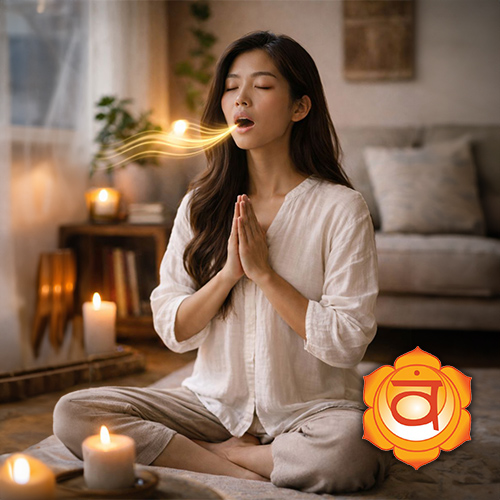
Sounds Associated with Swadhisthana Chakra
The sounds associated with the Swadhisthana Chakra, especially the seed mantra “VAM,” help activate creativity, emotional flow, and balanced sacral energy.
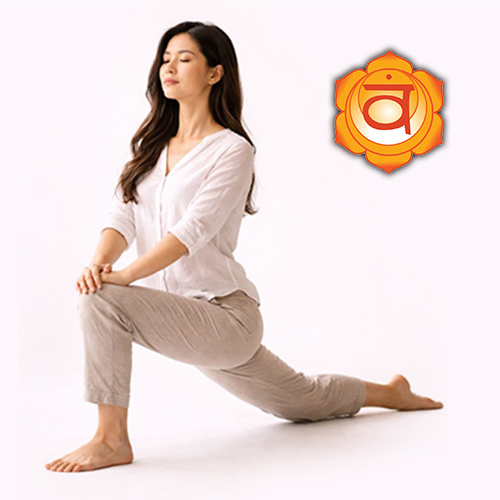
Yoga Asanas for Swadhisthana Chakra
Yoga asanas for the Swadhisthana Chakra support emotional release, flexibility, and the free flow of creative life energy.
Sounds Associated with Swadhisthana Chakra
The sounds associated with the Swadhisthana Chakra, especially the seed mantra “VAM,” help activate creativity, emotional flow, and balanced sacral energy.
Yoga Asanas for Swadhisthana Chakra
Yoga asanas for the Swadhisthana Chakra support emotional release, flexibility, and the free flow of creative life energy.
FAQs